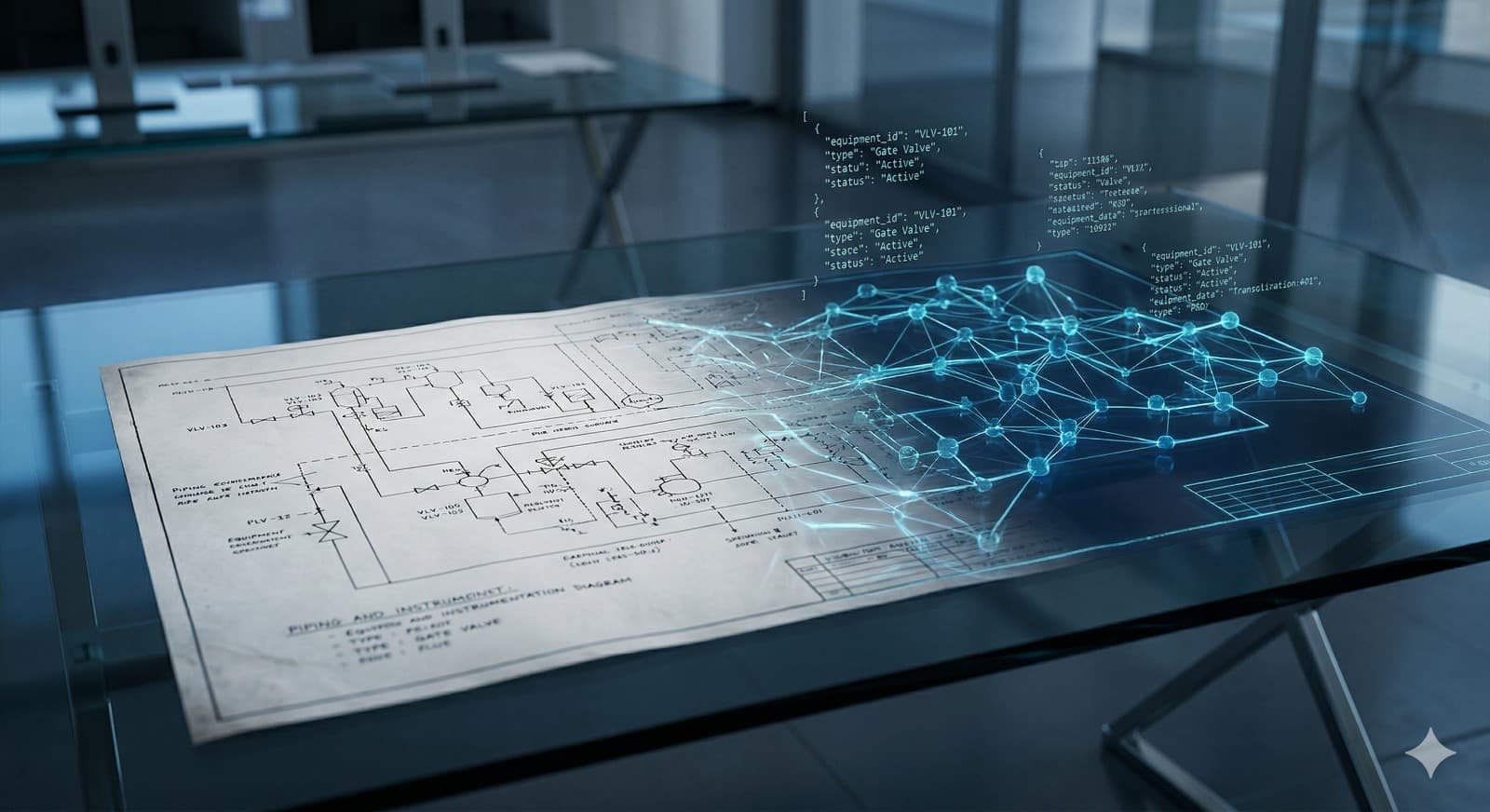
Actionable AI for Real Business: The EPCM Blueprint for Operational Excellence
Back to Blog
5 minutes read
Most B2B engineering leaders today do not struggle with understanding what AI is—they struggle with implementing it in a way that actually drives ROI.
In the Engineering, Procurement, and Construction Management (EPCM) sector, the stakes are simply too high for generic, off-the-shelf chatbots. EPCM is a heavily cognitive industry governed by strict IS/ASME/API compliance, complex deterministic calculations, and rigorous document control (IFA, AFC, As-Builts). A hallucination here isn't a tech glitch; it is a multi-million-dollar construction risk.
High-skilled engineers spend nearly 40% of their time on repetitive administrative logic rather than core design, leading to massive resource wastage. To bridge the gap between AI hype and practical business value, we must stop looking at AI as a magic wand and start treating it as an operational layer.
Here is the practical, deeply technical architectural blueprint for automating EPCM operations, integrating Human-in-the-Loop (HitL) intelligence with advanced deep tech.
1. Design Calculations: Knowing Where AI Belongs (and Where It Doesn't)
The most critical step in implementing actionable AI is knowing when to keep it out of the core math.
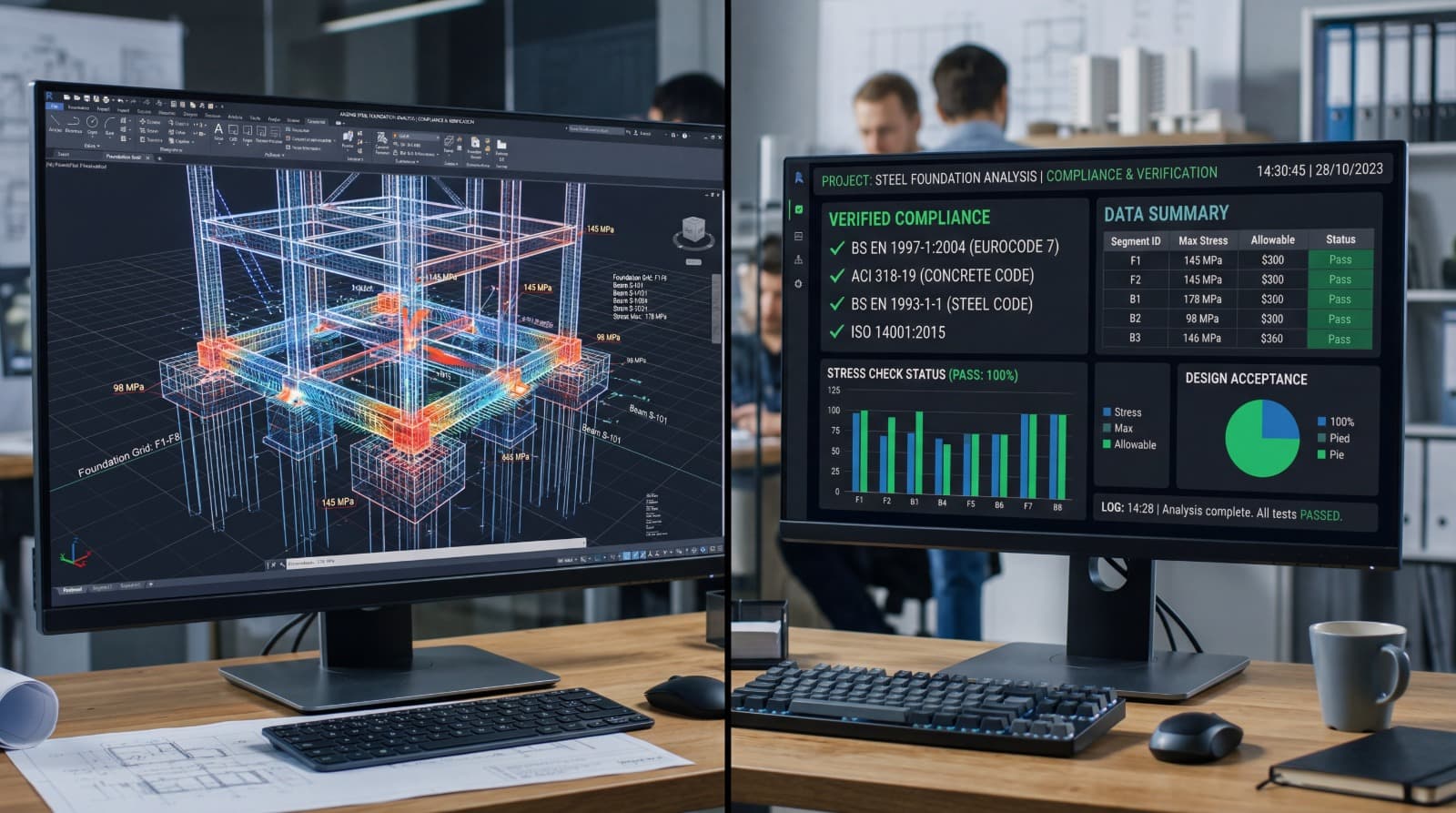
Whether an engineer is performing process line sizing, executing complex pipe stress analysis in CAESAR II, or optimizing structural members via STAAD.Pro output files, these workflows require absolute, deterministic precision. You cannot trust probabilistic AI models to calculate pressure drops or foundation reinforcement areas.
The Architectural Solution: The math remains deterministic, but the workflow is automated. We bridge the gap between manual calculation sheets or highly technical software outputs and the next execution step. For example, by extracting the output file from STAAD, we can automate the subsequent foundation and reinforcement optimization based strictly on hard-coded expert logic and standard practices. This provides excellent UI/UX, centralizes role-based data so knowledge stays within the firm, and leaves the final validation to a human expert. It eliminates the manual data-transfer bottleneck without introducing compliance risk.
2. The Drawing Review Ecosystem: Bypassing the "OCR Trap"
Reviewing complex engineering drawings—P&IDs, Equipment Layouts, Single Line Diagrams (SLDs), Piping GADs, and Isometrics—is one of the most time-consuming bottlenecks in EPCM. Extracting Bill of Quantities (BOQ) from these drawings takes weeks, is prone to human error, and delays multi-million dollar projects.
Most tech companies try to solve this using standard Vision AI and Optical Character Recognition (OCR). In the dense, layered, and symbol-heavy web of industrial CAD files, OCR hallucinates and fails spectacularly.
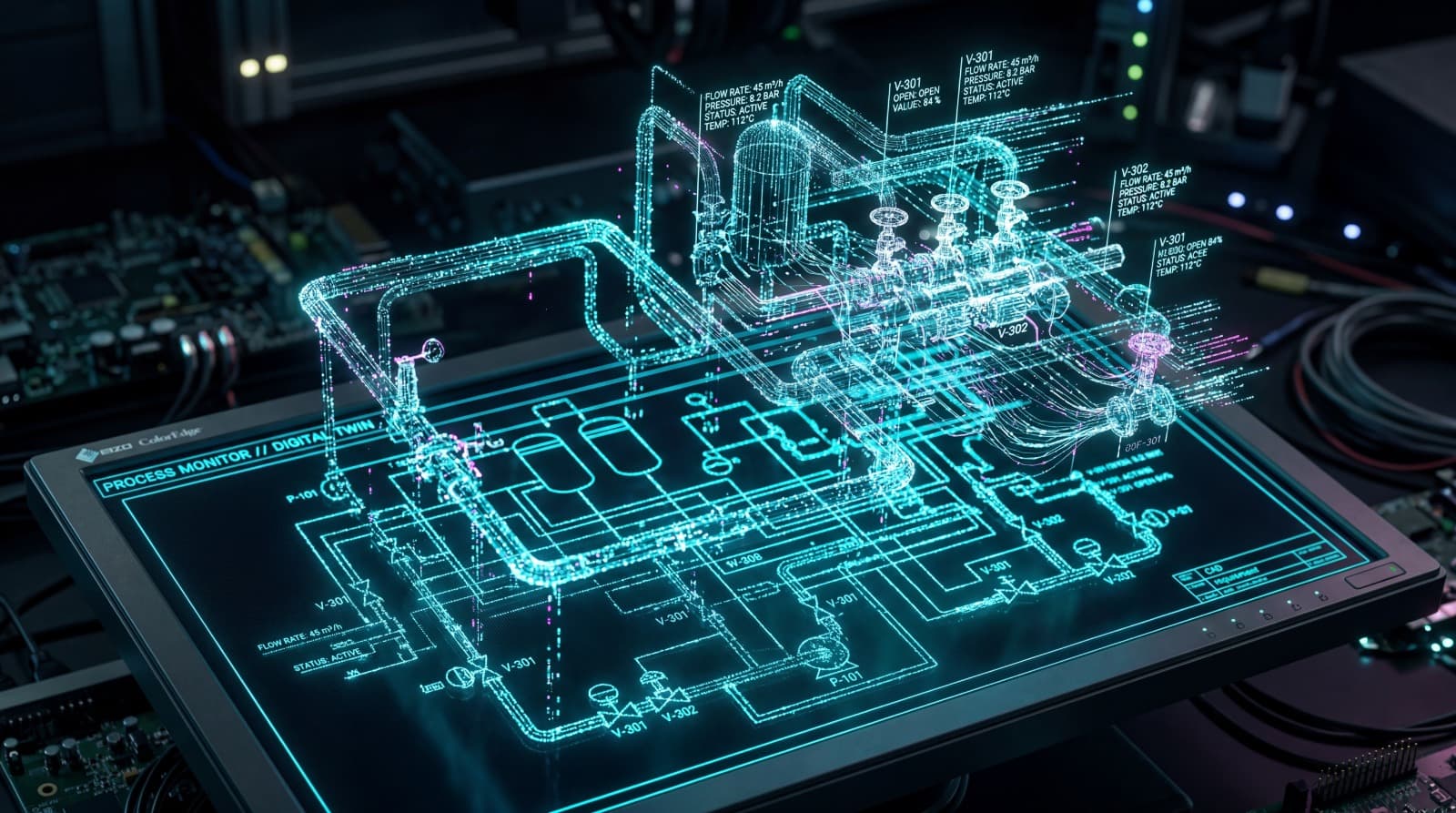
The Architectural Solution: True automation requires bypassing Vision AI entirely. The architecture must parse the raw engineering data vectors directly from the drawing files using backend extraction methods. Once that flawless geometric and metadata is extracted, it feeds into a structured, multi-agent AI ecosystem.
A "Structural Agent" and a "Quantity Agent" collaborate dynamically to review complex drawings and cross-verify data before generating final outputs. The AI cross-references this exact data against uploaded project standards, Checklists, and Quality Assurance Plans (QAP), executing complex industrial logic autonomously. It instantly flags discrepancies—like a spec break mismatch between a P&ID and an Isometric—preparing a tracked exception report for the lead engineer to validate.
3. Breaking Knowledge Silos with Contextual RAG Pipelines
Every EPCM project generates massive amounts of unstructured data: Technical Queries (TQs), vendor inputs, Squad Check markups, and shifting compliance codes. When an SME (Subject Matter Expert) leaves the company, that tacit project knowledge often leaves with them.
The Architectural Solution: By structuring a project’s complete history into a highly coded Retrieval-Augmented Generation (RAG) pipeline, the system acts as an omnipresent project memory bank. It seamlessly handles internal document management, tracks external client feedback, and assists in Technical Bid Evaluations (TBE) for procurement by instantly cross-referencing vendor datasheets against process requirements.
4. The "Magic" Differentiators: Scaling Human Expertise
When the deterministic foundation is set, we can deploy the real "magic" of AI to scale your existing workforce without linearly scaling your headcount.
- Role-Specific AI Co-Pilots: AI should be a specialized peer. Before a lead engineer reviews a newly developed P&ID, their AI Co-Pilot executes a rigorous first-pass review. It summarizes historical project comments, checks against previous errors, and prepares a brief for the human engineer, ensuring double safety.
- Dynamic Expert Support: Imagine your firm wins a project in a new region with extreme weather conditions—say, Russia (GOST standards). Your engineers might not know the local codes. A dynamic, intelligent chatbot trained on global industrial codes becomes their primary buddy, instantly upskilling your team on localized requirements.
- Workflow Autonomy: EPCM projects follow strict, interdependent scopes. By mapping these workflows into the system, the architecture automatically routes documents for Squad Checks, auto-assigns sequential tasks, and ensures proper compliance monitoring with zero manual follow-ups.
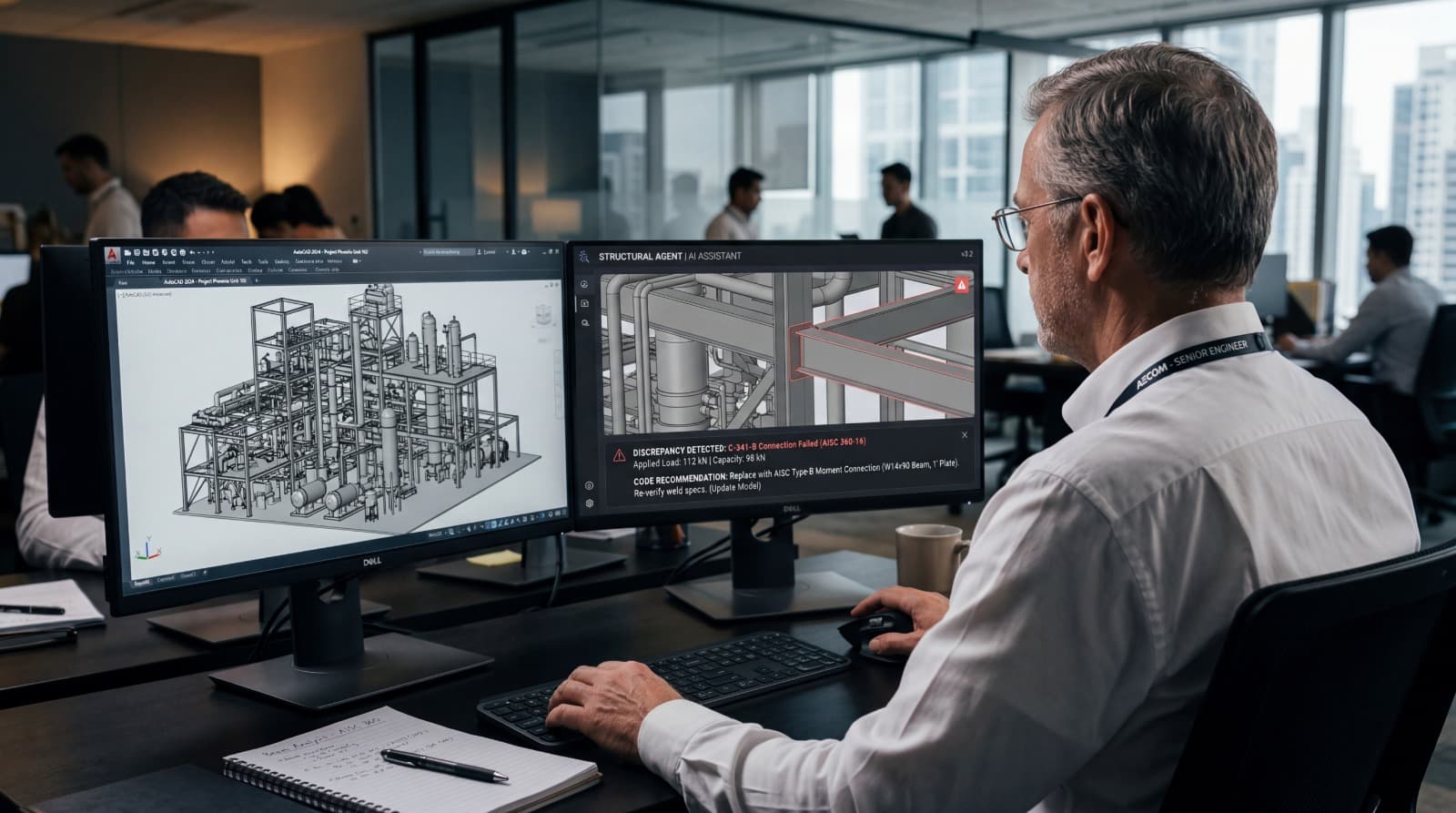
The Future of Autonomous Engineering
Successful AI implementation isn't about throwing generalized tools at your engineering team. It is about deeply understanding the painful realities of EPCM operations and designing a proprietary multi-agent architecture where agents are explicitly "trained" on industrial logic and rigorous EPCM standards.
At TheLinkAI, we aren't just coders; we are engineers who have managed the very sites we are now automating. We are actively developing E-AI—a deep-tech framework designed specifically to execute this exact blueprint, transitioning EPCM from manual workflows to a Multi-Agent AI-driven ecosystem.
If you are an Engineering Director, Project Manager, or CEO looking to see how this architecture practically applies to your P&IDs, Isometrics, and BOQ workflows, we are currently offering a 1-week free trial demo. You can experience the preliminary benefits of automated review and extraction firsthand, before discussing a fully customized deployment for your firm.
Ready to move from theory to execution? Connect with our team at info@thelinkai.com to request your demo access today.
Published on 3 April 2026