
What “AI Automation” Actually Means for Your Business
Back to Blog
5 minutes read
By Aashya Karn
A simple explainer for founders who keep hearing “automate it with AI” but want to know what it actually looks like
The Phrase Nobody Explains
Every founder has the same problem: you're still doing work that a system should be doing for you. Not the small stuff, like scheduling — you've probably already got that covered. It's the work one level up. Work that needs you to actually understand the business. Until recently, only a person could do that kind of work.
“Automate it with AI” is the phrase everyone throws around as the fix. But nobody explains what it means. Automate what, exactly? With what?
Here's the simple answer: it means using an LLM (short for large language model — the tech behind tools like Claude and ChatGPT) to do work that needs reading, thinking, and judgment. Not just moving files around.
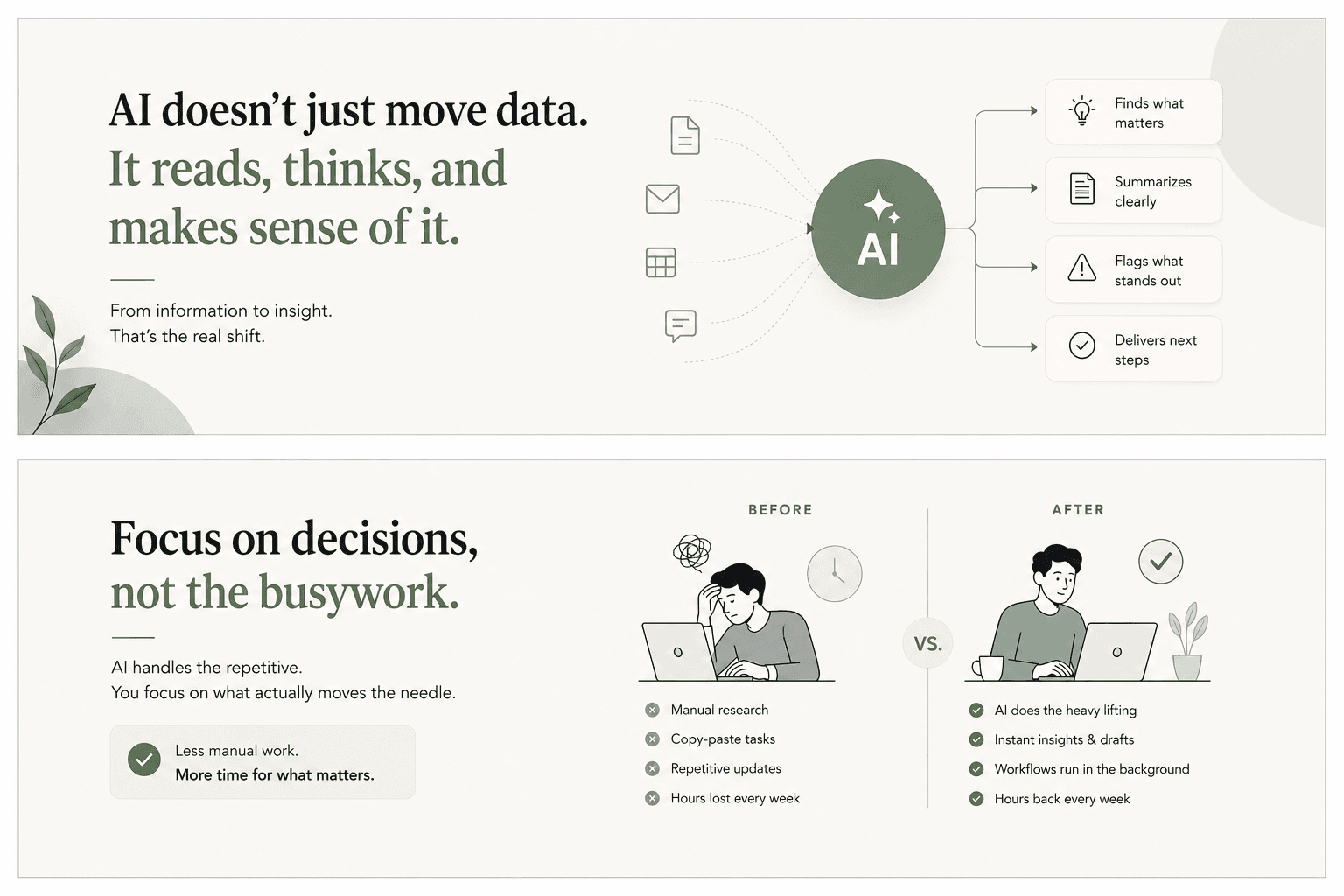
Automation can move an email into a folder. It can't read a contract and tell you what's risky. It can't turn a pile of numbers into an investor update. An LLM can do both. That's the real shift — and it opens the door to automating work that used to need a specialist.
Here's how it actually works, plus three examples built specifically around a founder's week, not a generic employee's.

How It Works: 3 Pieces, 1 Job
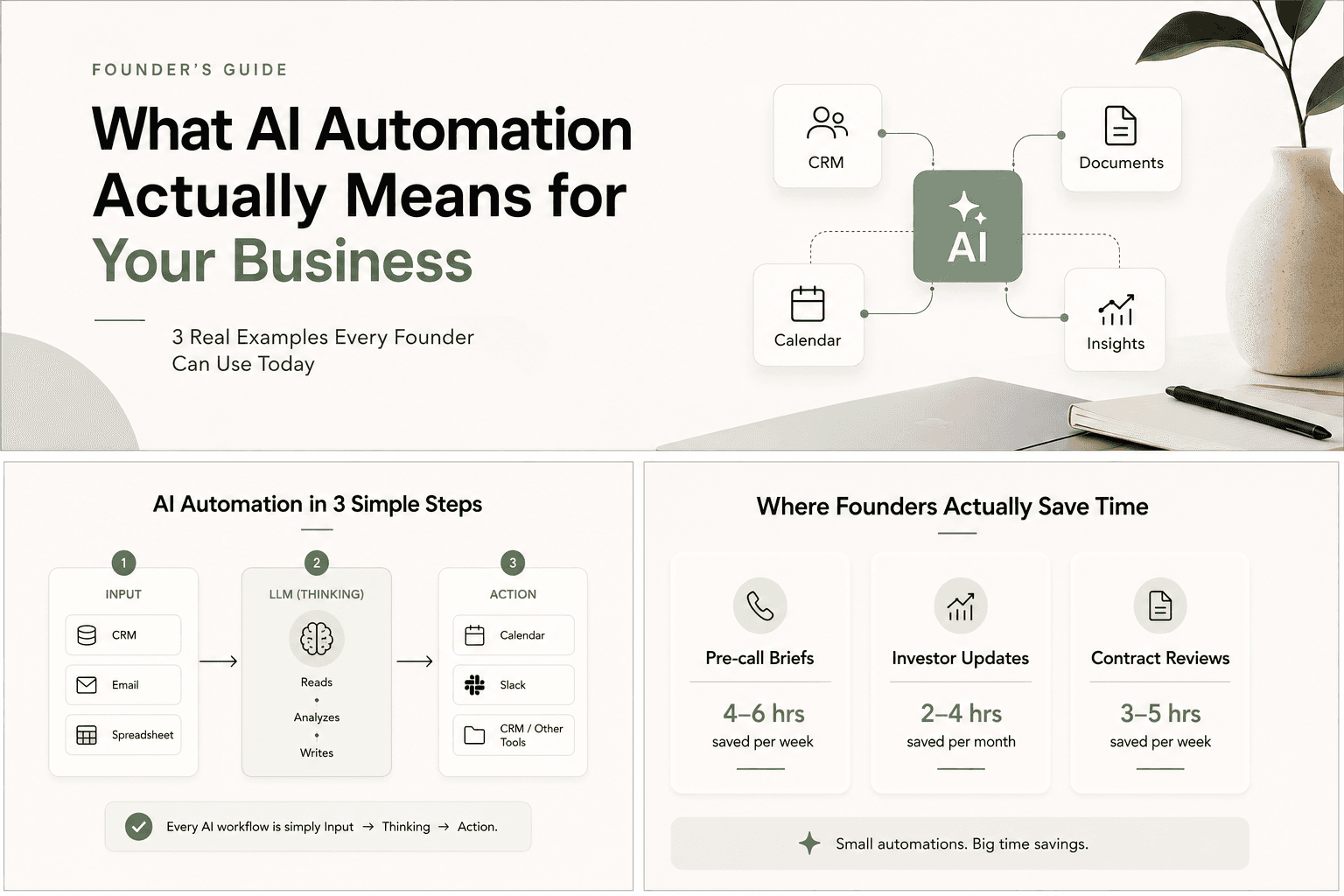
It's never one all-powerful AI running everything. It's usually three simple pieces, passing work to each other like a relay:
- Something that captures the input — a CRM record, a contract, a spreadsheet
- An LLM that reads it and turns it into something useful — a brief, a draft, a warning
- A connector (AI Automation) that delivers the result exactly where it needs to go — no copy-pasting
That's the whole pattern. Once you see it, you start noticing it everywhere. Here's what it looks like in practice.
Three Things Worth Automating First
1. A brief that's ready before every call
You know the feeling: five minutes before a call, you're scrambling. Old emails, CRM notes, trying to remember what you promised last time. Do that for every call in a day, and it adds up to 20–30 minutes of prep you never planned for.
Here's the fix: the second a meeting lands on your calendar, the system pulls everything about that contact — past emails, CRM history, old notes. An LLM turns it into a short brief: who they are, where things stand, what's likely to come up. It's sitting in your notes app before the call even starts.
The payoff: You walk in already caught up. For a founder with 8–10 calls a week, that's 4–6 hours back — and no more “wait, remind me where we left off.”
2. Investor updates that write their own first draft
Once a month, you sit down to build the update. Pull numbers from three tools. Try to remember what actually happened. Write something that sounds neither too rosy nor too alarming. Three to five hours, usually the night before it's due.
Here's the fix: the system pulls your real numbers — revenue, runway, pipeline — straight from wherever you track them. An LLM drafts the update in the tone and format you've used before. You just check it for accuracy and hit send.
The payoff: An evening of work turns into a 30-minute review. And updates go out on time, every time — which investors notice more than you'd think.
3. A first read on every contract, before you sign
A vendor contract lands in your inbox. You either read all eight pages yourself and hope you catch the one clause that matters, or you send it to a lawyer and pay for something that's usually routine.
Here's the fix: the contract goes to an LLM that knows what your normal terms look like. It flags anything unusual — a strange liability clause, a longer exclusivity period, an odd payment term — and explains the rest in plain English.
The payoff: Five minutes reviewing flags instead of thirty minutes reading fine print. You still call the lawyer — just only when it's actually worth it. That's 3–5 hours back across a normal week of paperwork.
How to Not Mess This Up
- Do one thing at a time. Get it working well before starting the next.
- Fix the process before you automate it. If your contracts or reports change every time, the automation will be just as inconsistent. Standardize first.
- Check your tools actually connect before building anything around them.
- Keep a human check in place, especially for anything client-facing or legally binding. This removes the busywork, not your judgment.
- Revisit it every few months as your business changes.
Start with whichever one costs you the most hours — or the most stress — right now.
Last Thing
The tasks that eat your week rarely show up on anyone else's to-do list. That's exactly why they're easy to ignore and hard to hand off — too specific for a hire, too repetitive to keep doing yourself.
At The Link AI, we help founders spot these moments, build the workflow around them, and get it running the right way — with real review steps in place. Not another tool to babysit. Actual hours back.
Whether you're just getting started or ready to go all-in on AI, we're happy to help you build something that fits your business — not just bolt on another tool.
Not sure which one to start with?
Send us your calendar for a normal week. We'll tell you, free, which one of these three would save you the most hours — no build, no pitch, just the answer.
Published on 30 July 2026