AI cold chain solution architecture
Back to Blog
4 minutes read
AI Cold Chain Solution Architecture: How RFID, IoT Sensors & Automation Reduce Losses and Boost Efficiency in Cold Storage Operations
Cold storage plays a vital role in preserving perishable goods, yet manual processes continue to cause significant losses. According to FAO data, global post-harvest food loss stands at approximately 13.3%, with fruits, vegetables, and other perishables often experiencing 25–40% losses depending on handling and market conditions.
A modular AI-powered cold chain architecture helps operators address these issues through real-time visibility, intelligent automation, and data-driven decisions. This article outlines a practical architecture that any cold storage business can adopt to improve efficiency, reduce waste, and strengthen profitability.
Common Challenges in Traditional Cold Storage
Facilities frequently face:
- Manual inventory discrepancies and excess stock
- Delayed detection of temperature or humidity issues
- Inefficient FIFO enforcement leading to spoilage
- Fragmented coordination with growers and suppliers
- Manual payment reconciliation and disputes
- Suboptimal packaging, pallet loading, and market routing decisions
These challenges increase operational costs and reduce revenue potential.
A Modular AI Cold Chain Architecture
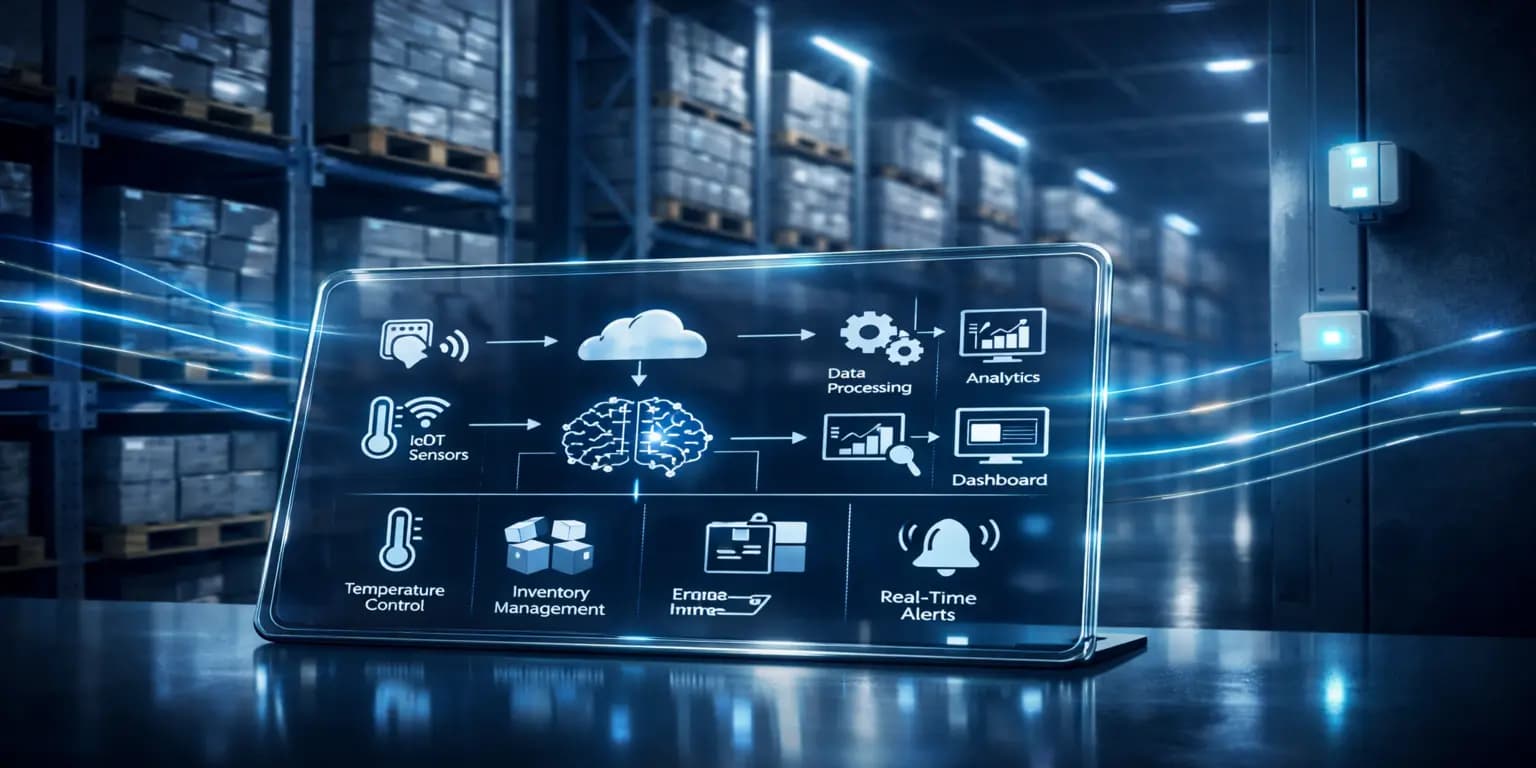
The architecture is built as an integrated, scalable system that works alongside existing refrigeration, packhouse, and MAF equipment. Here are the core components:
- RFID for Real-Time Inventory Management RFID tags deliver continuous visibility and automated stock reconciliation. Validated impact: Enterprise implementations have achieved inventory accuracy of 98–99% and notable reductions in shrinkage.
- IoT Sensor Networks + AI Quality Monitoring Sensors provide 24/7 tracking of temperature, humidity, and critical parameters, with AI generating instant anomaly alerts. Validated impact: Real deployments in cold warehouses have significantly improved monitoring speed and accuracy.
- Automated Process Monitoring Dashboards Central dashboards compare planned vs actual quantities and trigger smart alerts. Validated impact: Automated systems (e.g., Siemens + AutoStore collaborations) have delivered faster operations and better space utilisation.
- AI-Enabled Grower Payment Tracking Automated reconciliation compares contracted vs actual quantities, generates progressive reports, and flags potential discrepancies in real time. This reduces manual errors, speeds up settlements, and improves transparency in grower transactions. Research on AI in agri-supply chain finance shows that automation enhances payment accuracy and reduces disputes through better data integration and smart contract-like logic.
- AI-Driven FIFO & Packed Product Optimisation Intelligent rules automatically prioritise dispatch based on stock age and quality. Validated impact: Enhanced FIFO practices in perishable supply chains have been shown to meaningfully lower spoilage rates.
- Predictive Packaging Materials Management AI forecasts demand for cartons, labels, and consumables while tracking usage to minimise waste (manual systems often see 25–35% material loss).
- 3D AI Pallet Optimisation Real-time algorithms optimise box placement, weight distribution, and stability for safer, more efficient transport.
- Automated Grower Communication Systems Multi-channel (email, SMS, WhatsApp) scheduling and confirmations reduce manual coordination effort.
- AI-Driven Market Intelligence for Optimal Market Selection & Pricing AI analyses real-time market prices, demand trends, and route options to recommend the best markets and timing for dispatch. Validated impact: AI-powered demand forecasting and market intelligence tools in perishable supply chains have been shown to reduce forecast errors by up to 30%, improve inventory alignment with actual demand, and enable better pricing decisions through timely market routing.
All modules connect into unified AI dashboards that deliver predictive insights on spoilage risk, energy use, and revenue optimisation opportunities.
Proven Technology Stack (Practical & Scalable)
- User-friendly dashboards and mobile interfaces
- Workflow automation platforms
- Secure, scalable cloud databases
- Custom AI models (including computer vision for quality and forecasting)
- Hybrid edge + cloud architecture for reliable operation
This stack keeps implementation fast and cost-effective while maintaining high uptime.
Phased Implementation for Early Value
A typical rollout follows three stages:
- Foundation — Basic tracking, sensors, and communication tools
- Intelligence — AI models, predictive analytics, and automated dashboards
- Optimisation — Advanced features including payment tracking and market intelligence
Value appears early, with each phase building on the last.
Why This Architecture Delivers Real Advantages
- Lower spoilage and waste through proactive monitoring and smart FIFO
- Higher inventory accuracy and reduced holding costs
- Faster, more accurate grower payments with fewer disputes
- Better market decisions — identifying high-potential markets and optimal pricing windows
- Improved traceability and compliance for premium buyers and export markets
Cold storage businesses adopting integrated AI solutions consistently report stronger operational resilience and more data-driven decision-making.
Ready to explore an AI cold chain architecture for your operation?
At The LinkAI we design and implement these modular solutions tailored to your facility, existing equipment, and business goals.
We offer:
- A no-obligation discovery call to understand your current challenges
- A custom high-level architecture blueprint
- Practical guidance on phased implementation
Contact us
Contact us at info@thelinkai.com to begin the conversation
Published on 21 April 2026